You moisturize in the morning. Your skin feels comfortable for a while. By lunch, the tight feeling is back, and the small lines around your mouth seem more noticeable. It is easy to assume you need something stronger—or another layer.
Sometimes the useful question is simpler: are you helping skin hold water, slowing the water it loses, and giving its outer barrier a chance to recover?
Those are connected jobs, but they are not identical. Once you understand where each happens, “hydration” becomes less of a catchall explanation for every uncomfortable skin day.
Start with the layer you can touch
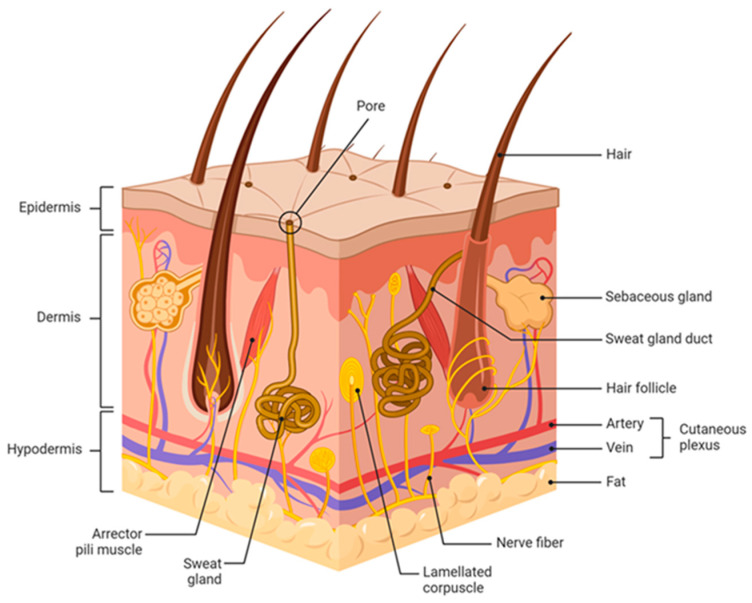
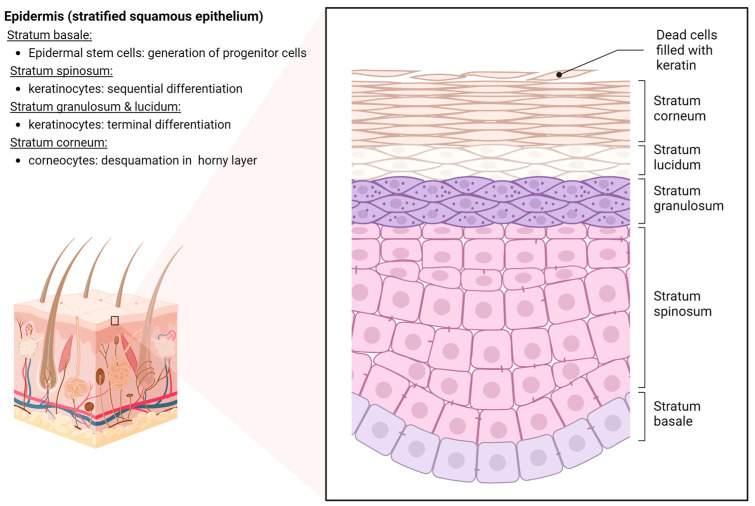
The stratum corneum is the outermost part of the epidermis, the skin's outer layer. It contains flattened cells called corneocytes, surrounded by a carefully organized mixture of fats, or lipids.
Think of a tiled surface. The tiles and the material between them both matter. Skin is more complicated than a bathroom wall—it continually renews itself—but the comparison helps explain why adding water alone cannot do every part of barrier care.
The lipid mixture includes ceramides, cholesterol, and free fatty acids. These help regulate water loss and the passage of substances through the outer layer. A foundational barrier-repair experiment found that the combination and proportions of these lipids affected recovery after skin was deliberately disrupted. Most of that work was in mice, with preliminary results in human skin.
That makes the mixture biologically interesting. It does not establish one ideal ratio for every person, every formula, or every kind of dryness. “Contains ceramides” is a useful detail, not a complete description of how something will behave on your face.
Your skin already has a water-holding system
Inside those outer cells is natural moisturizing factor, usually shortened to NMF. This is a collection of small, water-attracting substances that help keep the outer layer flexible. An important portion comes from the breakdown of filaggrin, a protein involved in the skin's outer-layer structure.
The everyday translation: your skin has its own moisture-retaining materials. They are part of the reason healthy skin can bend and move without feeling like dry paper.
Environmental exposure can affect this system. In a study of 40 healthy adults, researchers applied selected stressors under controlled conditions and measured changes in NMF and immune-signaling molecules. Several exposures lowered NMF. This was an experimental study, not proof that ordinary contact with any one substance will damage everyone's skin. It does show that moisture retention depends on the condition of the skin itself, as well as what you put on it.
Hydration, moisture retention, and repair answer different questions
Three words help separate the jobs. A humectant attracts and holds water. An occlusive slows water loss from the surface. An emollient helps soften and smooth rough-feeling skin. These functions can overlap within a formulation.
| What you are trying to change | What that means in everyday terms | What it does not establish by itself |
|---|---|---|
| Hydration | More water in the outer layer | That the barrier has fully recovered |
| Moisture retention | Less water escaping through the surface | That every cause of dryness has been addressed |
| Surface softness | Rough areas feel smoother | That deeper skin structure has changed |
| Barrier recovery | The outer layer regains more normal function | A permanent result after one application |
Researchers often assess barrier function using transepidermal water loss, or TEWL. It measures water moving through the skin and evaporating from its surface. Imagine checking how quickly a container loses water, rather than only checking how full it looks.
TEWL is useful in controlled measurements. It is not a diagnosis you can make by touching your cheek, and it is different from measuring how much water the outer layer currently contains.
Why a moisturizer can help without solving everything
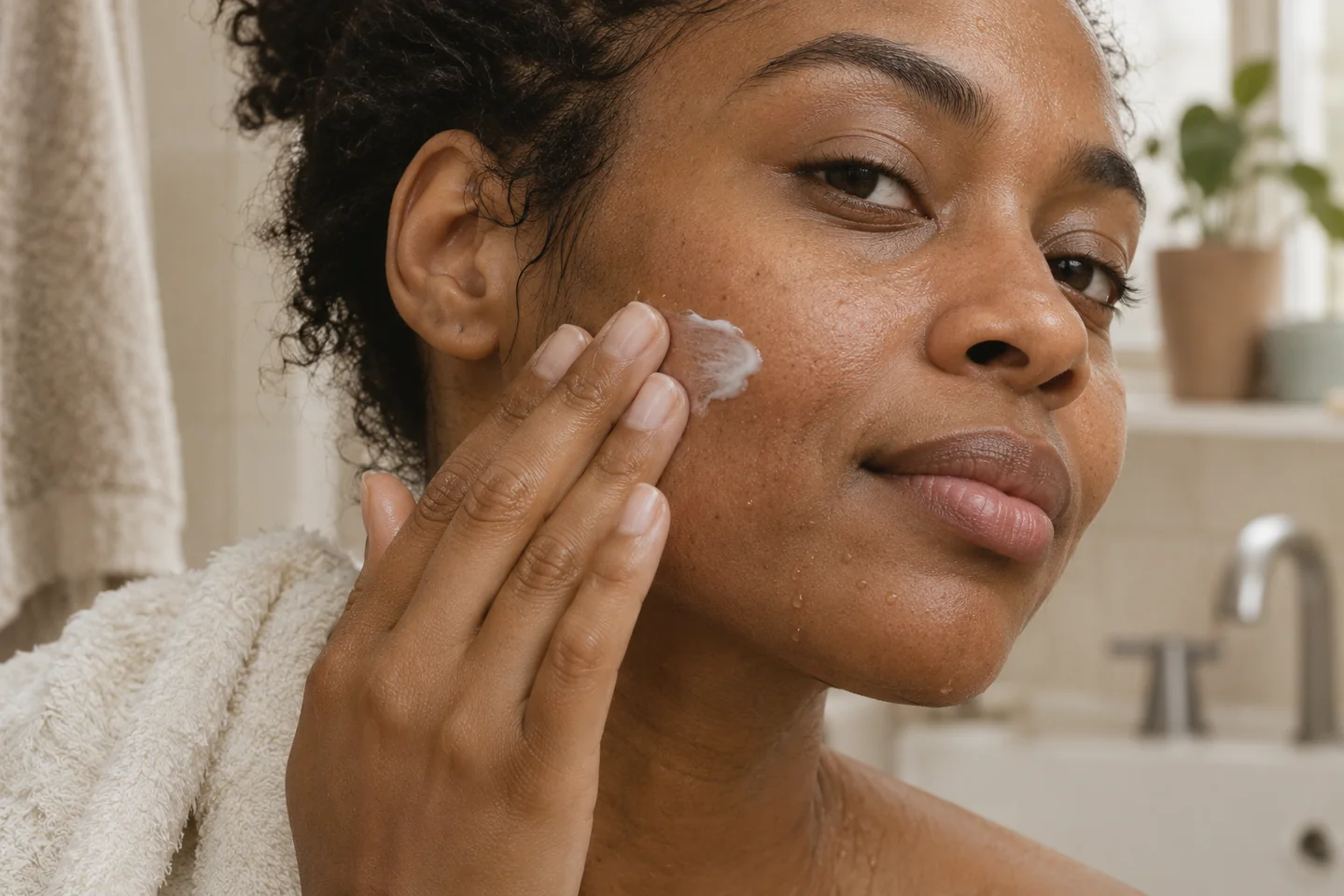
A routine can supply moisture while other parts of the day keep making skin uncomfortable. Hot water, repeated cleansing, dry air, or irritating steps can all be worth reviewing. The American Academy of Dermatology's dry-skin guidance recommends gentle cleansing, shorter warm rather than hot showers, fragrance-free care, and applying moisturizer while skin is still damp.
There is no need to turn that into an elaborate reset. Notice when the tightness begins. Is it immediately after washing? After a new exfoliating step? Only when the heating is on? A short record of what changed is often more useful than adding several new things at once.
Keep your observations specific: less tightness after washing, fewer flaky patches, less stinging. “Better barrier” is a scientific interpretation; “my cheeks no longer hurt when I wash them” is an experience you can actually track.
What about the skin's “water channels”?
Aquaporins are proteins that help certain small molecules move through cell membranes. One, aquaporin-3, transports water and glycerol. You may hear it described as a way of hydrating skin from within.
The science is interesting, but the context matters. In mice lacking aquaporin-3, researchers observed impaired hydration, elasticity, and barrier recovery; restoring glycerol corrected these defects. That supports a biological role for the channel. It does not mean everyday dry skin is usually caused by missing aquaporins, or that a topical ingredient can recreate the same result in people.
You do not need to identify a molecular defect to respond sensibly to a dry face. Start by making cleansing and moisture retention more comfortable. If dryness keeps returning despite gentle care—or comes with persistent itching, cracking, or a rash—a dermatologist can help identify what else is happening.
The goal is skin that feels comfortable through an ordinary day. That is a more useful target than the briefly glossy finish you see immediately after application.