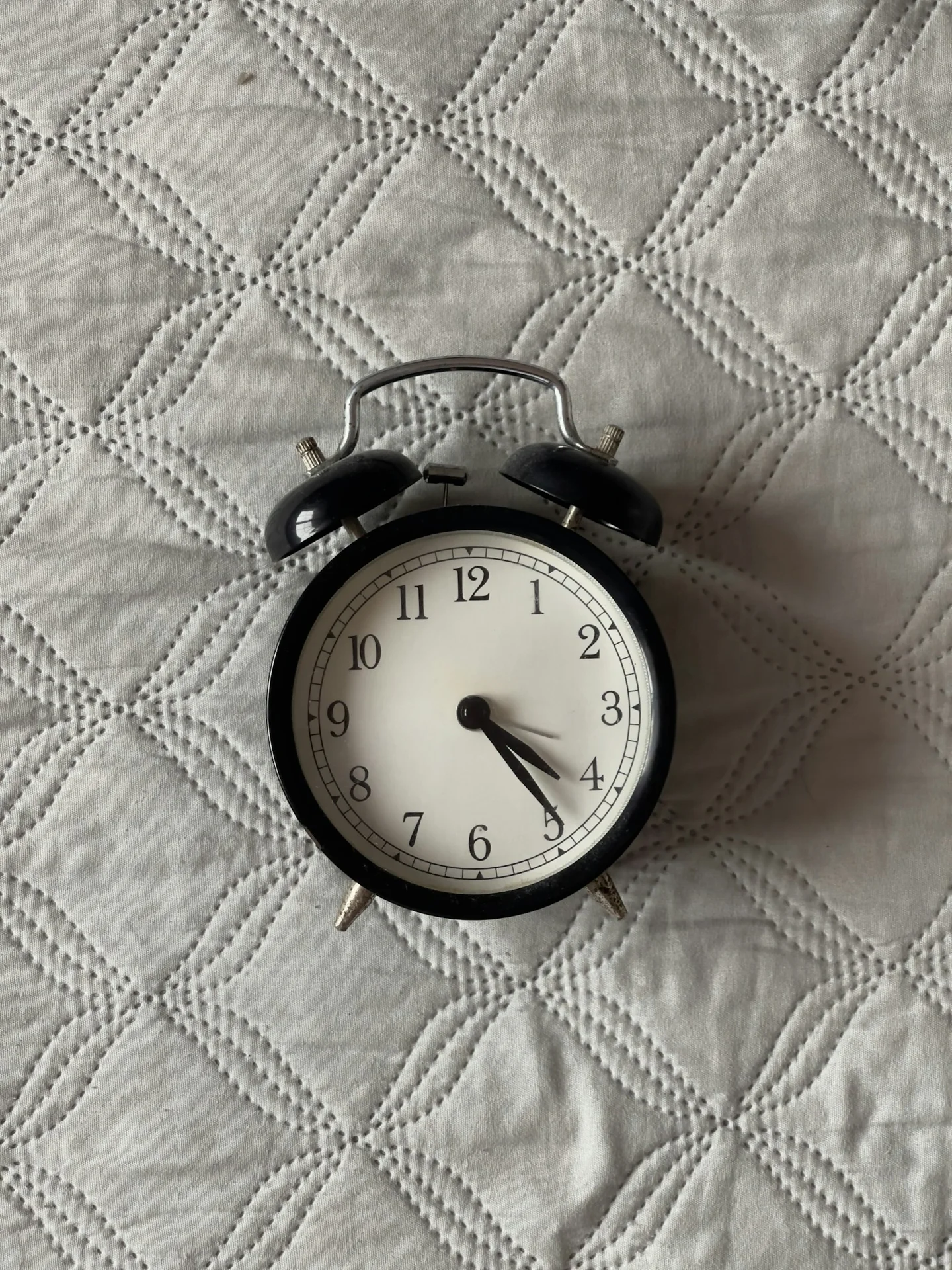

A quiet routine does not require a quiet life. It can begin while the kettle warms and end with the lamp still on. The invitation is small: notice where you are before the day gathers speed, and make a little space before carrying it into bed.
Give the morning one recognizable cue
Pick something that already happens: opening the curtains, sitting with a drink, or waiting for the shower to warm. For two minutes, notice your feet, the sounds around you, and the next comfortable breath. Keep your eyes open if that feels better.
You do not need to earn the pause by waking up earlier. Place it inside the morning you have. If a child interrupts or your mind moves straight to a deadline, acknowledge the interruption and return to one sensation. Returning is the practice.
Attention is a skill, not an empty mind
A practical way to understand mindfulness is noticing an experience while it is happening and returning when your attention wanders. You may feel the cup in your hand and then remember an email. You may notice the email thought and come back to the cup. The second movement matters as much as the first. A wandering mind does not disqualify you from the practice.
The NCCIH describes mindfulness within a broad range of meditation approaches, and the research includes programs much more substantial than a two-minute pause. Keep that scale in mind. A brief daily exercise can be a way to practice attention without claiming the outcomes of a longer clinical program. It is fine to use it for the modest reason that you want to notice the morning before opening your phone. An ordinary intention gives the practice room to stay ordinary.
Sources: [2]
Build the pause around a morning that already exists
The Good Trade's discussion of mindful mornings treats the routine as something shaped by a real life, rather than an ideal timetable. Use that idea to choose a cue with very little setup. The first sip of a drink, turning on the kitchen light, or sitting down after getting dressed may be more reliable than an alarm set thirty minutes earlier.
Try this version: keep the phone face down, feel where your body is supported, and name one thing you can hear. Then ask what the next hour needs. Perhaps it is breakfast before a call, a slower walk to the train, or writing down the errand you keep remembering. The answer should lead to a concrete choice, not a demand to become a calmer person. If the morning is shared with children, pets, or housemates, let those sounds be part of the exercise.
Sources: [1]

Give unfinished thoughts somewhere other than the pillow
An evening notebook works best when it stays small. Divide a page into three spaces: something that happened, something that needs attention, and the next action you can actually take. A difficult conversation may belong in the second space; sending a message tomorrow may belong in the third. You do not have to resolve the whole conversation before putting the pen down.
For example, instead of writing a long inventory of everything you should improve, write that the deadline moved, that you need to confirm the new priority, and that you will ask at the morning check-in. Close the page once the action is captured. The notebook is a place to hold a thought until you can use it. It does not need to become a record of how successfully you relaxed, nor another document you must complete perfectly before sleep.
The IHE Edit
Three cues for a quieter pause
A page, a bounded interval, and a softer corner can give the habit somewhere to land. Choose what fits the way you pause.

For one morning page
Intelligent Change The Five Minute Journal
A journal with morning and evening prompts for a brief check-in. Useful if a little structure helps you begin; a blank notebook can work, too.
Shop Intelligent Change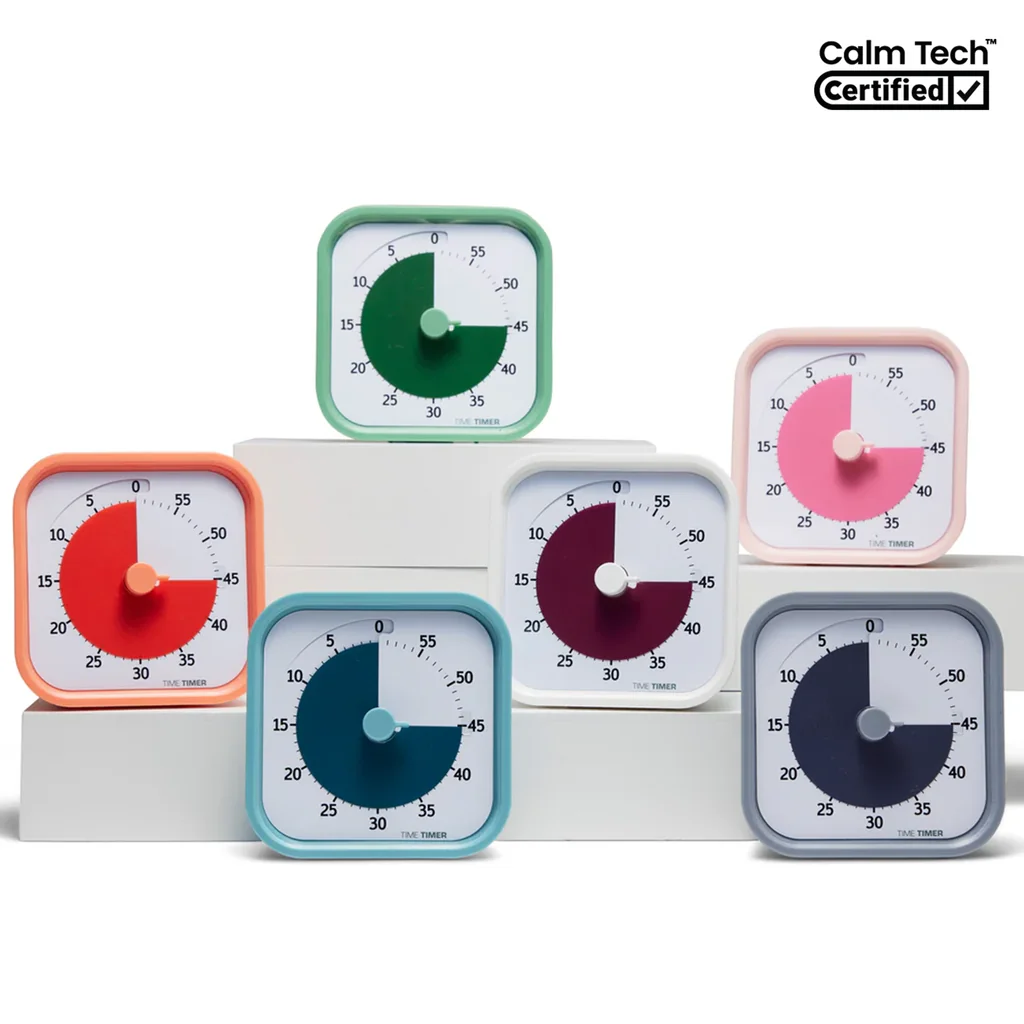
For a pause with an end
Time Timer MOD Home Edition
A visual timer for giving a work block, break, or small household task a clear end. Choose the interval around the job you actually need to do.
Shop Time Timer
For an evening corner
IKEA FADO Table Lamp
A white-glass globe lamp for a softer pool of light beside a sofa or bed. Check the footprint and choose the bulb separately.
Shop IKEAChoose a practice that feels possible in your body
Stillness is only one option. You can notice the temperature of water while washing your hands, the pressure of your feet while walking, or the sounds outside an open window. Keep breathing comfortable; there is no need to hold it or perform an elaborate count. If focusing inward feels difficult, use an ordinary object in the room as your anchor.
The NCCIH notes both uncertainty in parts of the evidence and the possibility of negative experiences with meditation. If a practice makes distress stronger, changing or stopping it is sensible. You can seek support rather than pushing through because an app says the session is nearly over. After a week, review the fit: which cue did you remember, which form felt tolerable, and what did you notice? Keep the useful part. A practice becomes more personal through adjustment, not through adding more rules.
Sources: [2]
Keep the expectations proportionate
Research on mindfulness covers many different programs and outcomes. It should not be presented as a guaranteed cure for anxiety, insomnia, or stress. Some people also find meditation uncomfortable; the NCCIH notes that negative experiences can occur.
If sitting with your attention intensifies distress, shorten the practice, change its form, or stop and seek support. A gentle walk or a conversation may suit you better. The routine is allowed to adapt to your needs.
Make a version for the days you miss
Keep the full version short enough to repeat and the fallback version even smaller: one breath at the window, one line before sleep. Missed days do not create a debt. Resume at the next cue without adding extra minutes as punishment.
After a week, ask whether the pause helped you notice something useful. Perhaps you remembered breakfast, named a worry sooner, or ended work with less unfinished noise. That is a more humane measure than a streak on a screen.