
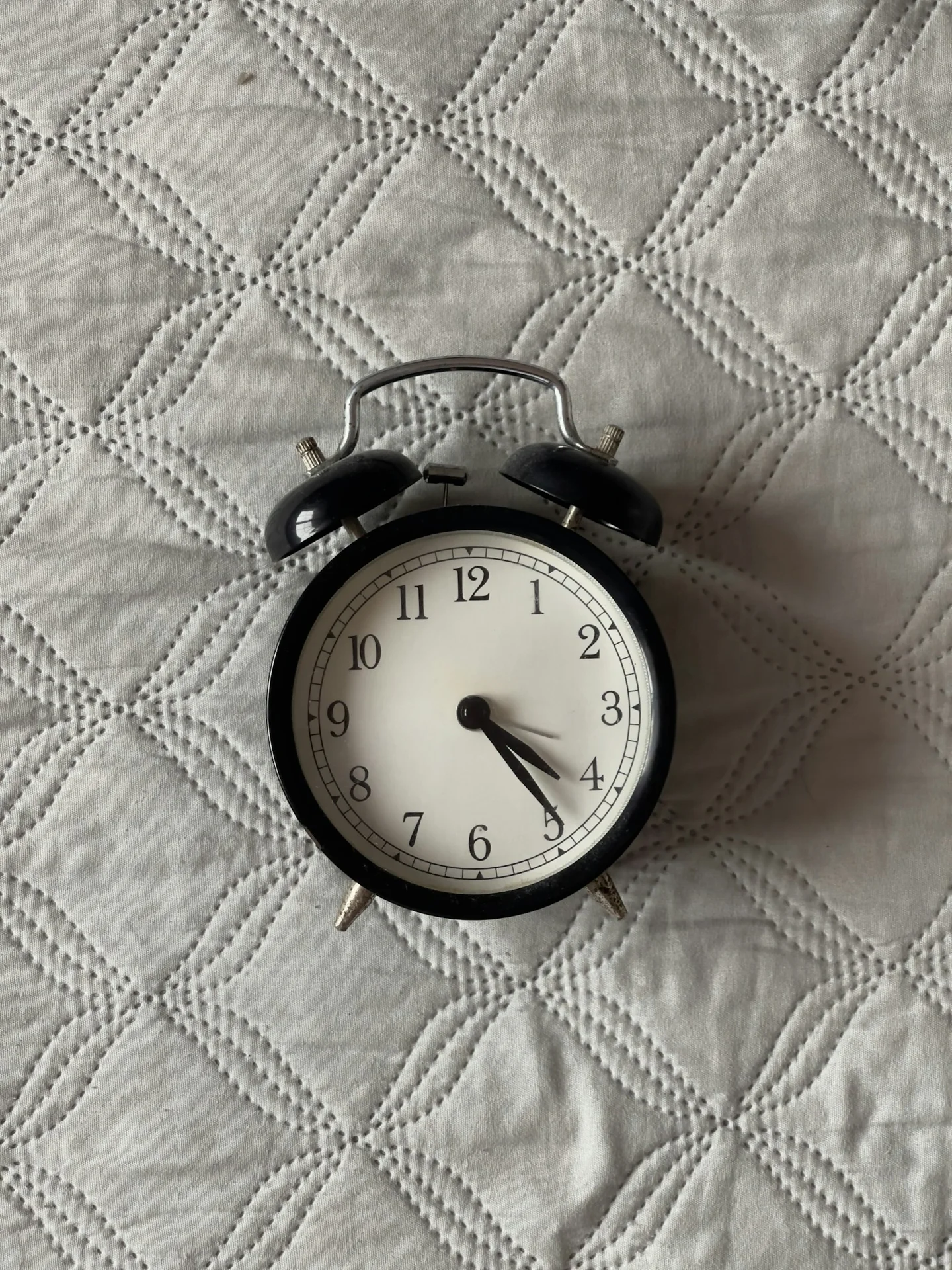
By Friday, sleeping in can feel like the one reasonable thing left on the calendar. Enjoying a slower morning is not the problem. The problem is expecting two days to do the work of five nights that were consistently too short.
Think about the week as a whole
Sleep deficiency can involve insufficient sleep, poor-quality sleep, or sleep at the wrong time. The NHLBI describes it as a health concern rather than a simple measure of willpower. Feeling slightly better after a long night does not tell you that every consequence of ongoing sleep loss has disappeared.
Look at the schedule that repeats. Is bedtime squeezed by work, caregiving, commuting, or an hour of scrolling that does not actually feel restful? Identify the constraint before deciding you need a more elaborate bedtime routine.
The term is useful, but sleep is not a bank account
Sleep debt is a convenient way to talk about accumulated short sleep. It becomes less useful when it implies that every missed hour can be repaid in one exact transaction. Sleep also has timing and quality. A long Saturday morning and a regular weekday bedtime change different parts of the schedule, even when the weekly total looks similar.
The NHLBI describes sleep deficiency more broadly than a low hour count. For your own review, note time in bed, estimated time asleep, the regularity of waking, and how you feel during the day. Do not turn the estimate into a precise medical score. If your watch reports an excellent night but you are still struggling to stay awake, the difficulty matters. The purpose of the record is to make a pattern visible enough to discuss and change, rather than to prove that the device is right.
Sources: [1]
What one recovery-sleep experiment actually found
A controlled study published in Current Biology in 2019 examined repeated short sleep with a weekend recovery opportunity in healthy young adults. The weekend break did not prevent the metabolic changes associated with returning to restricted sleep. It was a specific laboratory schedule, not a verdict on every person who has ever enjoyed sleeping late.
The useful takeaway is narrower than a frightening headline: a repeating pattern of insufficient weekday sleep should not be assumed harmless because the weekend feels restorative. The study does not mean an extra hour of rest has no value, or that a tired person should force themselves up early to maintain a streak. It suggests looking at the restriction that keeps coming back. If Sunday night always prepares you for another week of short sleep, the most useful plan needs to include Monday through Friday.
Sources: [3]

Find the first hour that can realistically move
Take one ordinary weekday and work backward from the time you have to wake. Put the fixed commitments on paper first: work, travel, caregiving, meals. Then mark the flexible ones. Perhaps the problem is a late meeting, a long cooking project, or television that continues after it has stopped feeling enjoyable. Different constraints require different solutions.
Choose one change that creates room rather than another bedtime task. Prepare tomorrow's lunch earlier, ask whether a meeting can move, or save a show for an evening without an early start. If work or caregiving leaves very little flexibility, acknowledge that honestly and seek practical support where possible. A scented candle cannot solve a schedule that never makes space for sleep. The experiment should change the time available for rest, not add another responsibility to the hour that is already crowded.
The IHE Edit
Make the evening easier to enter
Three optional bedside pieces for winding down. None can replace enough time for sleep.

For a bedside cue
Hatch Restore 3
A bedside sound machine and sunrise alarm for people who want those features in one place. Check app requirements and optional subscription features.
Shop Hatch
For softer light
IKEA FADO Table Lamp
A white-glass globe lamp for a softer pool of light beside a sofa or bed. Check the footprint and choose the bulb separately.
Shop IKEA
For an evening check-in
Intelligent Change The Five Minute Journal
A journal with morning and evening prompts for a brief check-in. Useful if a little structure helps you begin; a blank notebook can work, too.
Shop Intelligent ChangeMake the weekend supportive instead of corrective
Plan something restorative before filling the weekend with deferred chores. Leave a slower morning if you need one, but also consider how the evening will lead back into the working week. A late Sunday booking may cost more energy than it gives if it makes the familiar bedtime impossible. Arrange meals, clothes, and travel in a way that reduces Monday's friction.
Review daytime function alongside the timetable. Repeated unintentional dozing, loud snoring with breathing pauses, or tiredness that does not improve deserves medical attention rather than another attempt to optimize the weekend. The aim is not a perfectly identical seven-day schedule. It is a week that leaves enough opportunity for sleep and a clear plan for symptoms that remain. Rest becomes easier to protect when it is treated as a repeating need, rather than an emergency purchase made every Friday afternoon.
Sources: [1]
Let the weekend offer room, not pressure
A weekend can hold rest, enjoyable movement, and a little preparation for the next few days. Leave some time unassigned instead of turning recovery into another checklist. You are allowed to have a slow breakfast without calling it a protocol.
Notice whether a very different weekend schedule makes Sunday evening harder. If it does, experiment with a less dramatic change in wake time. Keep your own observations separate from universal rules circulated online.
Pay attention when time is not the whole issue
If you regularly allow enough time for sleep but remain very sleepy, or someone notices loud snoring or breathing pauses, talk with a clinician. Repeatedly adding hours in bed may not address an underlying problem.
For the coming week, protect one earlier evening and decide what will make it possible. The goal is a schedule that gives rest a place before exhaustion becomes the only reason to stop.