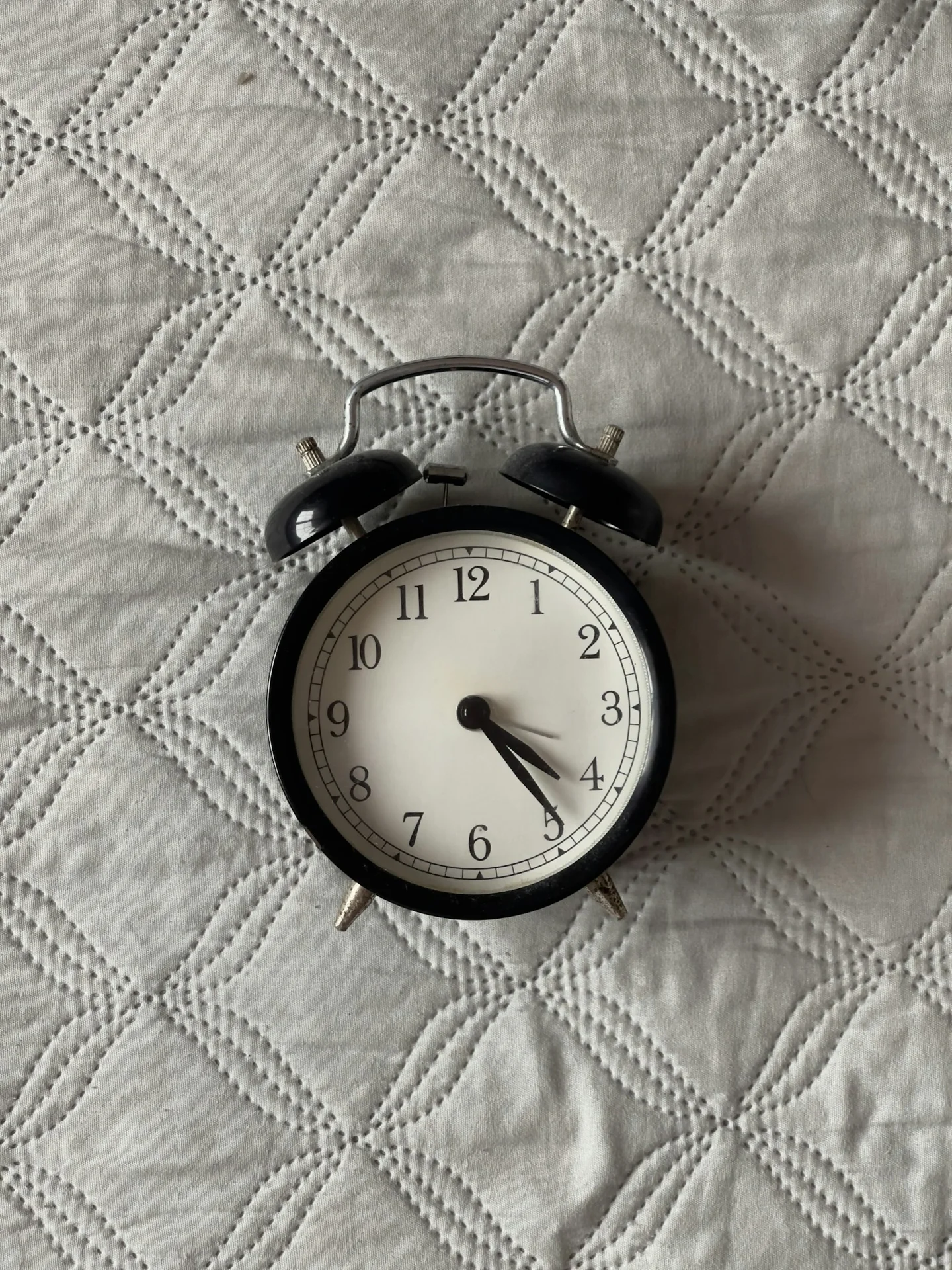

Opening your eyes five minutes before the alarm can feel satisfyingly organized. Waking much earlier, unable to return to sleep, feels different. The time on the clock is only one piece of the story; how often it happens and how you feel afterward matter too.
Look at the morning in context
Sleep timing responds to regular routines and environmental cues such as light. A familiar schedule may be part of why you sometimes wake near your usual time. That does not establish the reason for every early awakening.
Keep a brief record of bedtime, approximate waking, and next-day sleepiness. Add obvious context: a noisy room, an early worry, a late drink, or a shift in schedule. Look for a repeating pattern rather than declaring one morning a diagnosis.
The clock and the need for sleep are related, but different
The NHLBI explains sleep through two interacting processes: sleep pressure that builds while you are awake, and the body's internal daily timing system. Light and other cues help that timing system stay aligned with the day. Waking near a familiar alarm time may fit a regular schedule, but the time alone does not establish why you woke or whether the sleep was sufficient.
Compare two ordinary mornings. In one, you wake shortly before the alarm, feel comfortable, and function normally. In the other, you wake much earlier than planned, remain awake, and struggle through the afternoon. Those are different experiences even if both are called early waking. Keep the description specific enough to distinguish them. A good-looking morning timestamp is not a sleep assessment, and a single unusual morning does not need to become a diagnosis.
Sources: [1]
Check what happened before the awakening
Record a few nights without trying to reconstruct every minute. Note bedtime, approximate waking time, whether you returned to sleep, and daytime sleepiness. Add the context you already know: a noisy delivery, a pet moving around, a change in curtains, a late shift, or worry about an appointment. The record should remain short enough that you will actually keep it.
Then look for a change that coincides with the pattern. If waking began when dawn started reaching the room, the curtains are a reasonable first question. If it appears after a new medicine, ask the prescriber rather than stopping or changing the medicine yourself. If worry is repeatedly the first thing you notice, support for that worry may belong in the plan. The aim is to identify a useful next conversation or experiment, not to infer a hormone problem from a particular hour on the clock.

Make one room change so the result can be interpreted
If the room suggests a practical explanation, change one feature at a time. Move a noisy device, adjust the light entering the room, or review a temperature setting. Give the change several typical nights, and note whether the original pattern continues. Do not replace the bedding, add a supplement, buy an alarm, and change bedtime simultaneously if your goal is to understand what helped.
The Everygirl's sleep-essentials coverage is useful for considering comfort, but the presence of a sleep-related product is not evidence of better sleep. A lamp can support an evening routine; a clock can tell the time; a comfortable blanket can be pleasant. Their value should match those jobs unless there is suitable evidence for a stronger claim. Before buying, ask whether the product addresses something you have actually noticed. A problem described clearly is much easier to compare with the promise on a product page.
Sources: [2]
The IHE Edit
A calmer bedside setup
A bedside cue, softer light, and an evening check-in can make the room feel more settled. They do not diagnose or treat early waking.
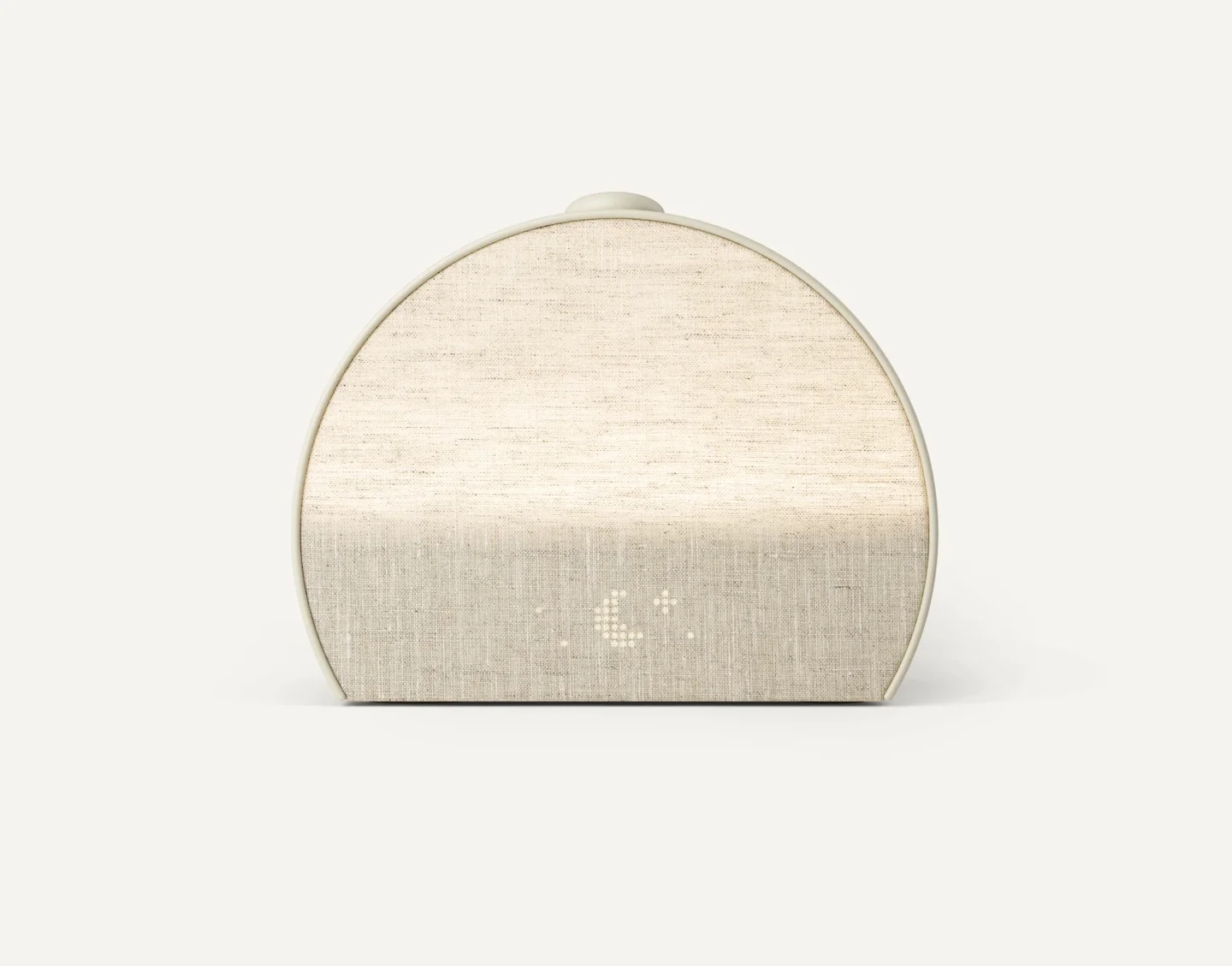
For a consistent bedside cue
Hatch Restore 3
A bedside sound machine and sunrise alarm for people who want those features in one place. Check app requirements and optional subscription features.
Shop Hatch
For evening light
IKEA FADO Table Lamp
A white-glass globe lamp for a softer pool of light beside a sofa or bed. Check the footprint and choose the bulb separately.
Shop IKEA
For a brief evening page
Intelligent Change The Five Minute Journal
A journal with morning and evening prompts for a brief check-in. Useful if a little structure helps you begin; a blank notebook can work, too.
Shop Intelligent ChangePersistent lost sleep deserves more than a morning hack
The NHLBI describes insomnia as including difficulty staying asleep or waking too early when there is adequate opportunity for sleep. If early waking is frequent, distressing, or affecting daytime function, seek advice rather than treating it as a scheduling achievement. Bring the brief record and your medicine list, and mention symptoms such as snoring or breathing pauses if they occur.
Ask what the next step is intended to evaluate and when to follow up. Avoid presenting an online interpretation as a confirmed cause. At home, leave tomorrow's first action written down and keep the clock from becoming a repeated calculation of how little sleep remains. If you wake a few minutes early and feel rested, a quiet start may need no correction. The useful distinction is the effect on your life over time, not whether the morning begins before the alarm sounds.
Sources: [3]
Separate a pleasant early start from lost sleep
If you wake a little early and feel rested, you may simply have a quiet few minutes before the day starts. There is no need to turn that into a problem to solve.
If you are waking much earlier than you want and feel tired through the day, the pattern deserves attention. Extra gadgets are not a substitute for discussing ongoing sleep problems, medication effects, or other health concerns with a clinician.
Leave yourself less to work out at dawn
Write tomorrow’s first task down in the evening so it is not waiting to be solved in bed. Keep the clock from becoming the most interesting object in the room. If worry repeatedly takes over, seek support for the worry itself.
The useful measure is how the routine supports your days over time. An early wake-up is information, not an award for having the most finely tuned morning.