
A widening part can turn an ordinary shower into a research project. Suddenly every serum seems urgent, and every photograph looks like evidence. Before adding another bottle, it helps to separate two questions: what is changing, and what kind of help fits that change?
Bring a timeline, rather than a theory
Make a short note of when you first noticed the change, whether it appeared gradually or suddenly, and anything that happened around that time. Include new medicines, an illness, pregnancy, and changes to eating or styling. Take a few photographs in the same light instead of inspecting your hair several times a day.
A dermatologist can examine the scalp and decide whether further tests are useful. Pattern loss, temporary shedding, and an inflamed scalp can require different approaches. A product search cannot make that distinction for you.
First, distinguish a changing part from damaged lengths
The useful photograph is often the least dramatic one: your part, taken at the same angle, with dry hair and similar lighting. A close-up of strands in the shower tells you what happened in that shower. It cannot tell you whether follicles are gradually producing finer hair, whether you are shedding after a disruption, or whether strands are snapping along their lengths. Those distinctions change the conversation at an appointment.
Female pattern hair loss commonly develops as a widening part or increasingly diffuse thinning. The AAD describes it as progressive and emphasizes diagnosis because other conditions can look similar. That is a reason to book an assessment while the change is still subtle, rather than waiting until you can prove it to everyone else. Bring photographs, but let examination determine what they mean. Your job is to describe the change clearly, not to arrive with the correct diagnosis.
Sources: [3]
Understand the commitment behind a familiar ingredient
For female pattern loss, topical minoxidil is an established option. According to the AAD, judging its effect can take six to twelve months of continued use. Some people notice increased shedding early in treatment; scalp irritation is also possible. Pregnancy, plans for pregnancy, and breastfeeding are reasons to avoid it and discuss alternatives with a clinician. The concentration, foam or solution format, and application frequency belong to the specific product directions.
Before beginning, consider what ongoing use would actually involve. Is there a reliable place in your morning or evening for application? Can you budget for replacement bottles? Who will you contact if the scalp becomes uncomfortable? A treatment plan is easier to follow when these ordinary questions are answered before the first dose. Buying the largest bundle does not substitute for understanding the routine.
Sources: [3]

Separate better-looking hair from a hair-loss treatment
A volumizing shampoo, a tinted scalp powder, and a medicine may all improve your relationship with the mirror, but they do different jobs. A styling product can make existing hair look fuller. A conditioner can make lengths easier to handle. Neither result, by itself, demonstrates that the cause of thinning has changed. The AAD makes this distinction explicitly when discussing shampoos marketed for hair loss.
Keep two lists if it helps: comfort now, and treatment over time. On the first, put the cut, styling approach, or cosmetic coverage that makes getting ready less fraught. On the second, put the plan agreed with your dermatologist and its review date. There is no need to reject a useful cosmetic because it is not a treatment. There is also no need to describe a cosmetic effect as regrowth to make it feel worthwhile.
Sources: [3]
The IHE Edit
Three products with different jobs
A treatment option, a newer serum to investigate, and a basic wash-day step. They answer different questions; this is a comparison, not a combined treatment plan.
For a treatment conversation
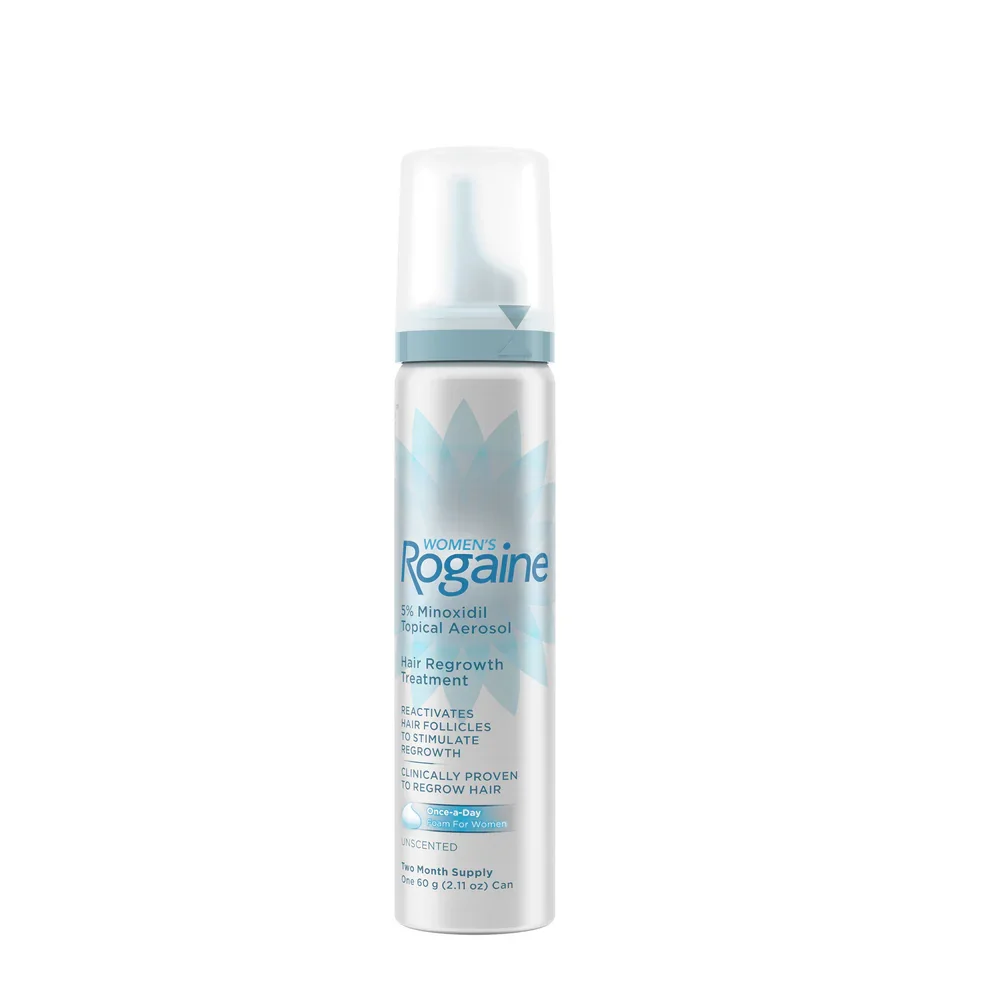
Women’s Rogaine 5% Minoxidil Foam
A topical minoxidil option to discuss when the diagnosis makes it suitable. Read the directions and warnings; it is not a treatment for every cause of shedding.
Shop Rogaine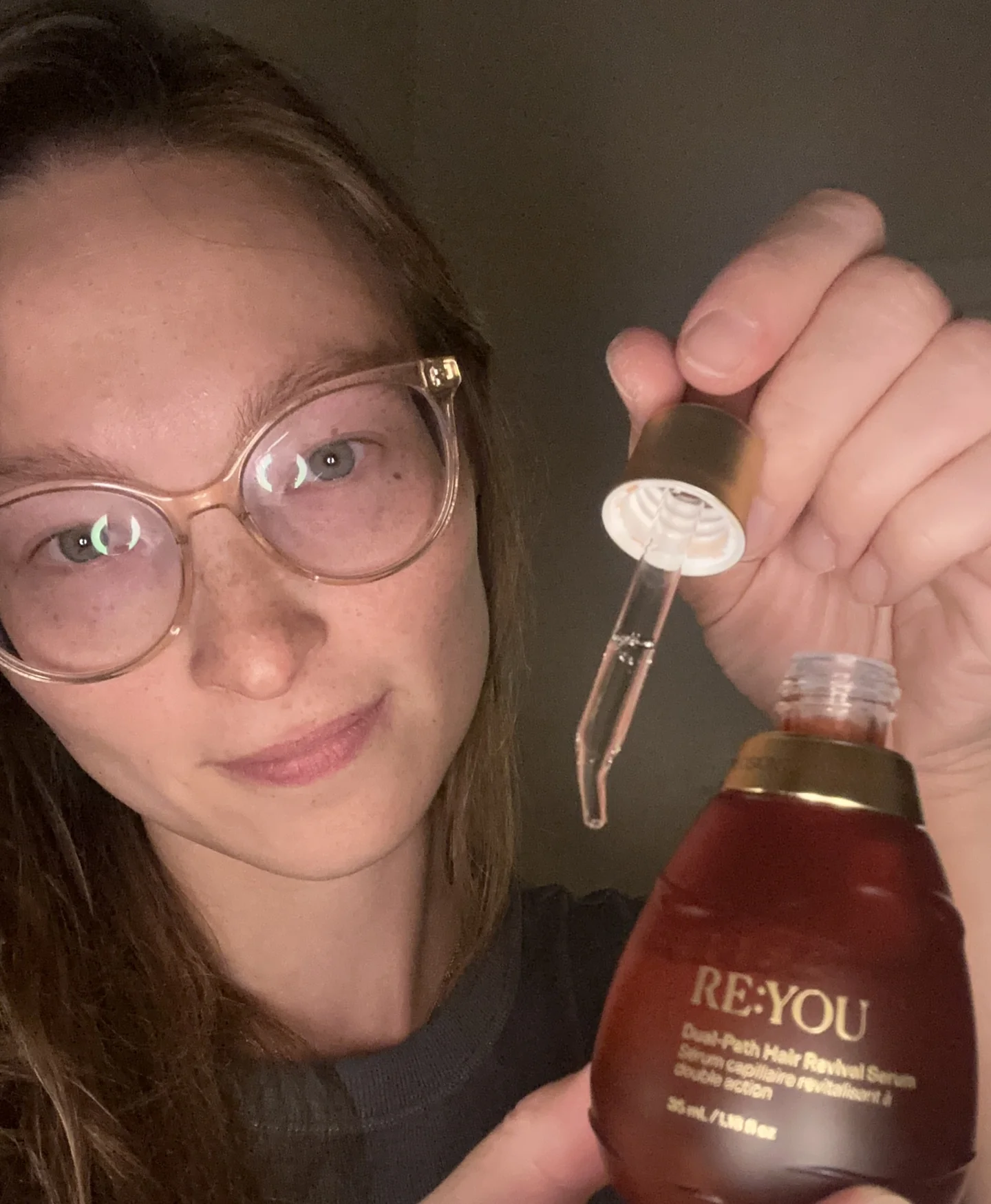
For comparing a newer serum
RE:YOU Dual-Path Hair Revival Serum
A drug-free serum to compare by its finished-formula evidence and daily routine. Read the company’s study details and follow the product directions.
Shop RE:YOU
For the cleansing step
Vanicream Shampoo
A fragrance-free, non-medicated shampoo for the cleansing step. Choose the washing frequency around your scalp and styling routine.
Shop VanicreamRead a promising headline all the way to its comparison
The Everygirl's discussion of rosemary oil captures a common shopping dilemma: a familiar botanical becomes attached to a much larger hair-growth promise. Before treating any headline as a reason to switch, ask whether the evidence concerns the ingredient, the exact bottle, or a different population from you. A result in one formulation does not answer every question about concentration, application, or long-term use.
Imagine two product pages. One says that users felt their hair looked thicker; the other reports a measured change against a comparison treatment. Those are different outcomes, even if both pages use a percentage. Ask to see the methods and the number of people who completed the study. If those details are unavailable, save the claim as a question for your clinician. Curiosity is useful. Turning every interesting ingredient into an immediate purchase is exhausting.
Sources: [2]
Ask a newer product to show its work
A rosemary-oil reel or a laboratory result can make an ingredient interesting. It does not establish that a finished product will work better for you. Ask for the human study, who participated, how long it lasted, and what was measured.
Keep a note with three columns: the claim, the evidence linked to it, and the unanswered question. If the page never gets beyond a mechanism or a before-and-after photograph, the uncertainty belongs in the decision. Popularity is not a treatment comparison.
Make the waiting period easier to live with
Agree on a review date with your clinician, then use consistent photographs at sensible intervals. Consider a haircut, gentle styling, or cosmetic coverage if those make the day feel easier. You do not have to postpone feeling like yourself until a treatment delivers a visible result.
Sudden or patchy loss, pain, marked scaling, or a rapidly changing scalp deserves assessment. Bring your product list to the appointment. The useful next purchase may turn out to be nothing at all.